With access to information becoming easier with improvements in global technology, consumers want to know more about their favorite products and the processes behind it. This information also enables consumers to make more informed decisions about the products they consume. From the farm to the supermarket’s shelf, consumers want to know it all.
This is blockchain: modern technology’s answer to establishing transparency and trust; between consumer and producer and connecting what would otherwise be a very unconnected group.
Today, farmers across the Asia-Pacific region are also embracing blockchain technology to help improve their supply transparency and add value to their produce.
A blockchain is a ledger in which agents take turns recording information on the process of generating, transacting and consuming a product or service. The ledger is collectively managed by all participating parties typically through a peer-to-peer network. A new record must be verified by the network before adding it to the blockchain. Any alteration to the recorded data should follow consensus decision-making protocol, meaning the majority of the parties involved should agree. In addition, an alteration to one record will lead to the alteration of all its subsequent records. It is, therefore, almost impossible to change in data recorded in a blockchain in practice – the decentralization of information.
Jiwaka province is the pilot province for an agriculture blockchain project in Papua New Guinea. The Food and Agriculture Organization (FAO) in collaboration with International Telecommunications Unit (ITU) at the request of the Jiwaka Provincial Government have initiated a small but significant effort in integrating blockchain technology at the farmers and growers level. Using blockchain technology to prove their livestock meets international standards and help farmers gain access in to the international markets.
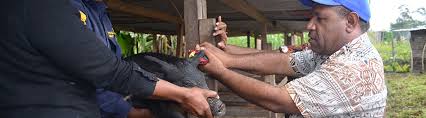
Farmers can use Radio Frequency Identification “tagging” and a smartphone application to record information on their pigs and piggery methods. They can input data such as dietary and nutrition information; to medical information on the pigs; to pedigree and other relevant information. This provides verified digital history to the buyer as wells as in instilling consumer confidence and assurance. The provincial government has funded training and equipment for 25 smallholder farmers to start. With commitments at the national government level to improve the much needed infrastructure for better internet accessibility, farmers can be hopeful that accessibility in to global markets will be attainable for them in the near and foreseeable future.
These traceability systems will contribute to building consumer trust and enable farmers gain leverage in the international markets as well as improving the trust between the producer and the consumer.
With 85% of the country’s population involved in subsistence farming; agriculture and livestock is and will be for a long time the driving force of the livelihood of Papua New Guinean communities and society.
The initiative taken on for livestock opens the door to a new horizon of possibilities that may be leveraged through accessing the international markets with the integration of blockchain technology.
 Eat Drink Port Moresby